
Inside Ketang: The Guangdong Town That Processes 70% of the World’s Crystal Jewelry
Date: September 11, 2026 | Guangdong, China
Once a quiet agricultural town in the Haifeng hills, Ketang (可坷镇) in Shanwei, Guangdong now hosts more than 11,000 jewelry businesses, processes over 50,000 tonnes of colored gemstones every year, and accounts for more than 70 percent of the world’s crystal jewelry processing volume in a single square kilometer of workshop floors. The town does not mine a single carat of crystal locally; it imports raw material from Brazil, Afghanistan, Sri Lanka, Madagascar, Uruguay, and Zambia, then cuts, polishes, and ships finished bracelets, pendants, and beads to buyers in over 180 countries.
Key Highlights:
- Processing scale: Ketang processes over 70% of the world’s crystal jewelry and 50,000+ tonnes of colored gemstones per year, with annual output value stably above RMB 5 billion (about USD 700 million).
- Industry cluster: More than 11,000 jewelry market entities, about 40,000 workers (roughly half of them migrants), 120+ gemstone varieties processed, and products exported to 180+ countries and regions.
- Livestream and cross-border commerce: 2025 livestream jewelry sales reached RMB 2.2 billion; Shanwei’s online jewelry retail grew 214.4% YoY in the first nine months of 2025. Over 150 local firms now run cross-border livestreams on TikTok, Temu, Shein, and AliExpress, and the town’s e-commerce sector helped push Shanwei’s 2024 export growth to 63.5% (the fastest in Guangdong).
- Global context: The global crystal jewelry market was valued at USD 35.2 billion in 2025 and is projected to reach USD 62.8 billion by 2034 (CAGR 6.6%), with Asia Pacific (China-led) holding the largest regional share at 37.2%; the global amethyst segment alone is forecast to grow from USD 4.5 billion (2026) to USD 7.8 billion by 2034.
Why Ketang, why now:
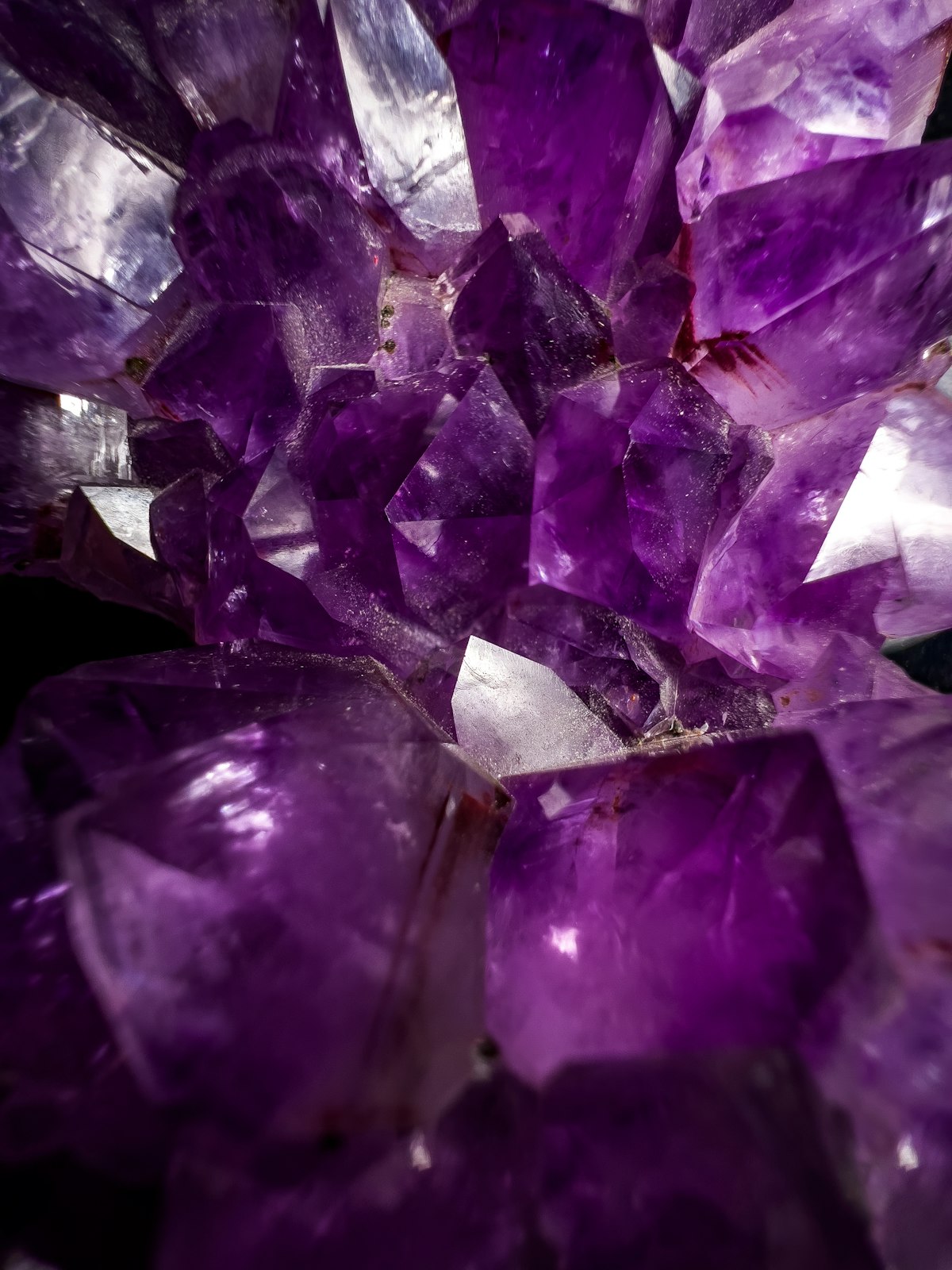
Ketang sits at the midstream of the global colored gemstone supply chain. It does not own the mines (amethyst comes mainly from Brazil and Uruguay, tourmaline from Madagascar and Mozambique, lapis from Afghanistan), but it controls the cutting, polishing, drilling, and stringing that turn rough stones into the bracelets and pendants sold by retailers from Los Angeles to Lagos. Two new industrial parks (Jinsheng and Yatianni) now host 578 settled manufacturers with centralized acid-wastewater treatment, replacing the old network of backyard workshops and resolving one of the cluster’s longest-running environmental pain points. A Gemological Institute of China (GIC) testing base and a China University of Geosciences (Wuhan) jewelry teaching site now operate in town, putting a national-level certification pipeline next to the polishing wheels.
The compliance horizon:
Buyers sourcing crystal bracelets, amethyst pendants, and bead strands from Ketang should plan for two converging pressures in 2026 and beyond. First, the EU Packaging and Packaging Waste Regulation (PPWR, Regulation EU 2025/40) became directly applicable on 12 August 2026, and its recyclability, minimum recycled content, and packaging-minimisation rules apply to jewelry boxes, blister packs, and shipping cartons as much as to any other consumer product. Second, the wellness-crystal boom has pulled counterfeit and dye-treated material into the lower price tiers: most commercial citrine is heat-treated amethyst, dyed howlite is regularly sold as turquoise, and leaded glass appears as ametrine. Independent gem-lab verification (GIA, IGI, NGTC) is now a procurement requirement, not a nice-to-have.
Free Tool: iExcellents offers a free online PPWR compliance tool – check EU packaging compliance requirements for your jewelry, beauty, and consumer-goods shipments at iexcellents.com/ppwr-compliance.
iExcellents continues to monitor global trade trends to serve our clients better.